
Solar Panels San Isidro Laredo TX
For San Isidro properties, battery backup is often the deciding factor between a standard grid-tied array and a system designed to keep specific circuits running during an outage.
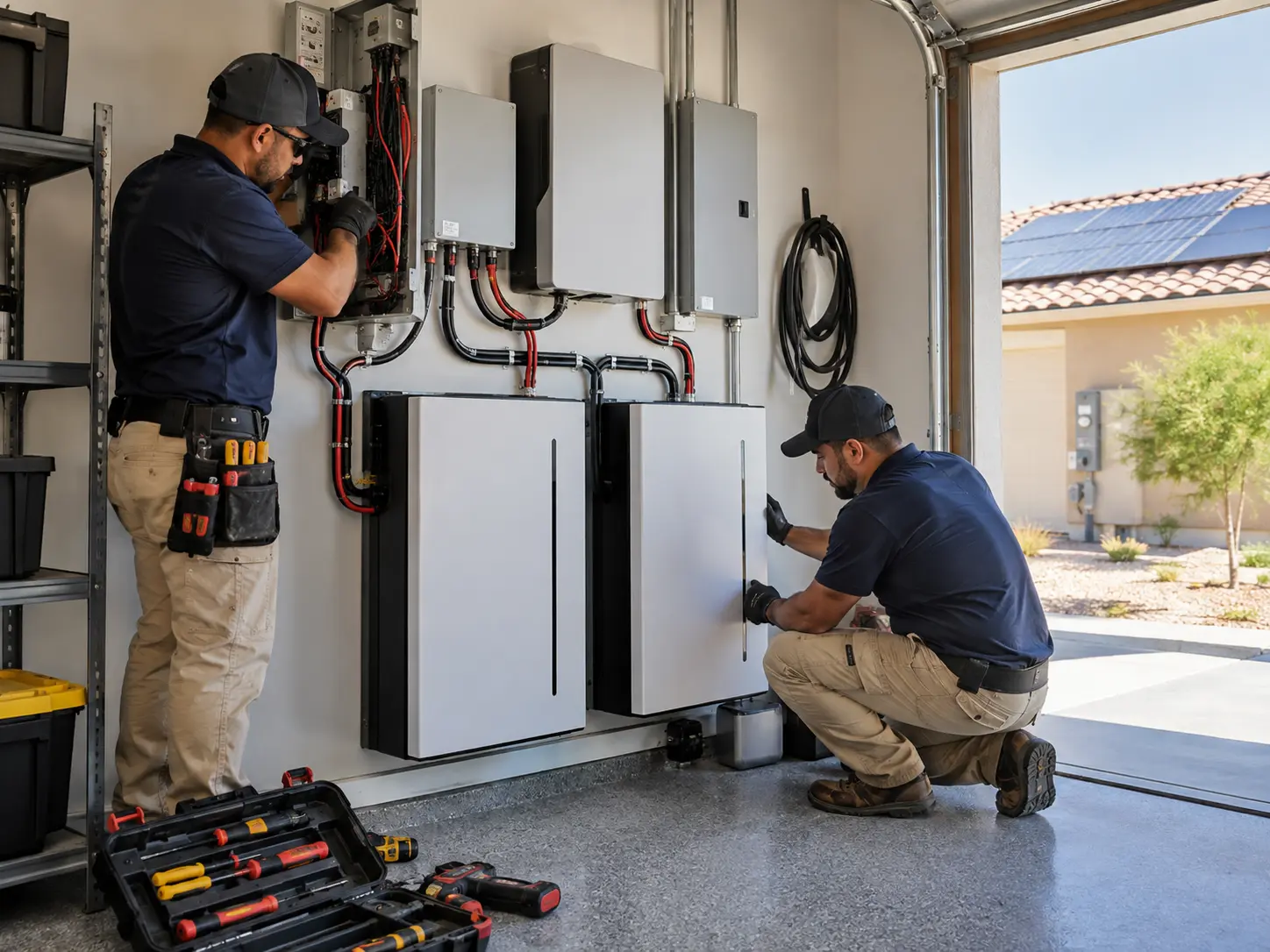
A solar array and a battery solve two different problems. The array generates electricity during daylight hours and can offset what would otherwise be purchased from the utility. A battery stores some of that generation for use later, including during a utility outage when a grid-tied array without storage will not power the home. For properties where outage reliability matters — whether due to distance from other services, well water pumping, or simple preference — battery backup is worth evaluating alongside the base solar design.
How Backup Circuits Are Chosen
Most residential battery installations use a dedicated backup subpanel wired to a defined set of circuits rather than the whole electrical panel. Typical choices include refrigeration, selected lighting circuits, a well pump if the property has one, and communications or medical equipment. Whole-home backup is possible with enough battery capacity and the right inverter configuration, but it is a distinct design decision that should be discussed explicitly, not assumed.
Sizing a Battery for Backup
- List the specific circuits you want powered during an outage.
- Estimate daily energy use for those circuits in kilowatt-hours, not just their wattage.
- Decide how many hours or days of backup you want to plan for.
- Confirm whether the battery can recharge from solar production during a multi-day outage.
- Check inverter compatibility, since not every solar inverter supports every battery.
Considering battery backup for a San Isidro property?
Tell us which circuits matter most during an outage and we'll walk through sizing options.
Pairing Backup With the Base Solar Design
Backup capability works best when it is planned alongside the array design rather than bolted on afterward. If you know battery backup is a goal, mention it before your solar panel installation is designed, since inverter selection and subpanel placement are easier to plan up front. Read more on solar battery storage for how systems are typically configured, and see residential solar planning for how the base array is sized.
Before Requesting a Battery Quote
- A prioritized list of circuits you want backed up.
- How long an outage typically needs to be covered for your needs.
- Whether you have an existing solar system and its inverter model.
- Location for the battery and backup subpanel indoors or outdoors.
- Budget range, since battery capacity scales cost significantly.
Questions to Ask About Battery Backup
- Which specific circuits will be on the backup subpanel?
- What is the usable battery capacity in kWh, not just the rated capacity?
- Can the battery recharge from solar during an extended outage?
- Is my current inverter compatible, or is a new inverter required?
- What is included in the total price for equipment, subpanel and labor?
San Isidro Solar & Battery FAQs
Does a solar array work without a battery?
Yes. A grid-tied solar array without a battery still offsets electricity use during daylight production hours and reduces what is drawn from the utility. Without a battery, though, the system typically shuts down automatically during a utility outage as a safety measure, so it will not power your home when the grid is down.
What does a battery actually protect during an outage?
That depends entirely on how it is configured. Batteries are commonly wired to a dedicated backup subpanel covering selected circuits — refrigeration, some lighting, a well pump, communications equipment — rather than the entire home. Whole-home backup is possible but requires larger battery capacity and is a separate conversation with your installer.
How is battery size determined?
Sizing starts with which loads you want backed up and for how long, measured in kilowatt-hours per day. A designer adds up the expected draw from those circuits and matches it to a battery capacity, sometimes with more than one battery unit. This is independent from how the solar array itself is sized for daytime offset.
Can a battery be added to an existing solar system later?
Often yes, but it depends on the existing inverter. Some string inverters support an add-on battery interface, while others require a separate hybrid inverter or a second inverter dedicated to the battery. Ask what your current or proposed inverter supports before assuming a battery can be added without additional equipment.
Is a generator or a battery better for backup power?
They solve different problems and are sometimes used together. A battery responds instantly and silently but has finite stored capacity that depletes if the outage is long and skies are cloudy. A fuel-fired generator can run as long as fuel is available but requires fuel storage, maintenance and typically manual or automatic transfer switching. Compare based on your specific reliability priorities.
Related Solar Resources
- Solar Battery StorageHow backup systems are configured.
- Solar Panel Installation Laredo TXHow the base array is built.
- Residential Solar Laredo TXPlanning a home solar project.
- Solar Panel Cost in Laredo TXHow battery capacity affects pricing.
- Solar Savings CalculatorModel production and offset.
- Solar Service AreasAll communities we serve.
Planning backup power for a San Isidro property? Start a quote request or call 956-395-1662.
Ready to Explore Solar for Your Property?
Start with a quick quote request and provide a few details about your property and current electricity use.