
Solar Panel Cleaning Laredo TX
Dust, pollen and residue settle on module surfaces between rainfalls, and enough buildup can measurably reduce the sunlight reaching photovoltaic cells. Cleaning restores surface clarity without damaging glass, seals or coatings.
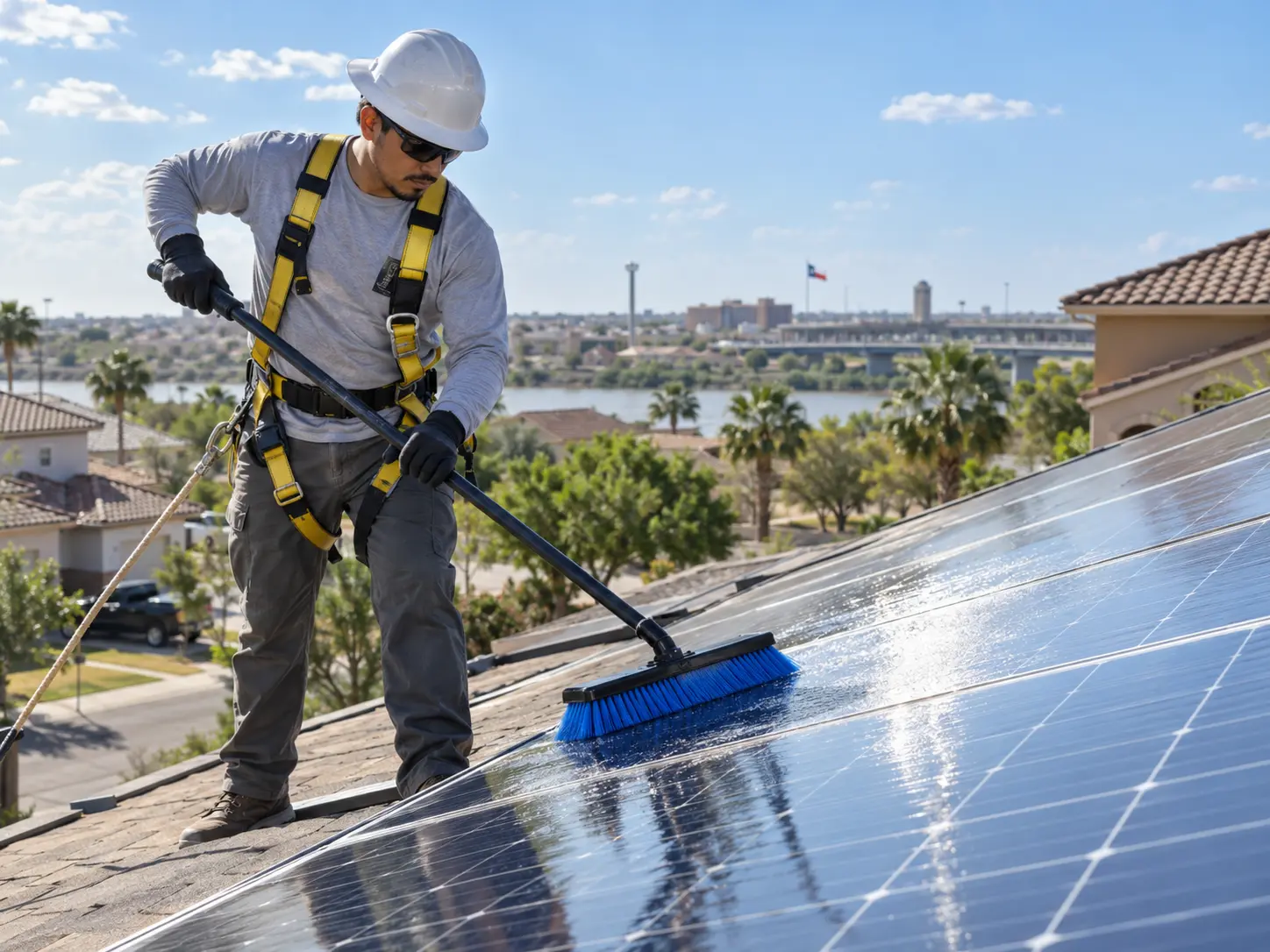
A solar module's output depends on how much sunlight reaches its photovoltaic cells. Anything sitting on the glass surface — dust, pollen, bird droppings, construction debris — blocks some of that light. Rain helps, but it doesn't reliably clear caked-on residue, and in stretches with little rainfall, buildup can accumulate faster than nature clears it.
Cleaning is a surface-level service distinct from maintenance, which checks electrical connections and hardware condition, and from system inspection, which is a broader diagnostic review. Some providers combine cleaning with a maintenance visit; others offer it as its own service.
Why Owners Schedule Cleaning
- To recover production lost to visible dust or residue buildup on module surfaces.
- To remove bird droppings or organic debris that can cause localized hot spots on a module.
- To clear construction dust or agricultural debris after nearby activity.
- To maintain consistent monitoring readings without buildup skewing the data.
- To keep an array looking maintained ahead of a home sale or property inspection.
What a Cleaning Visit Typically Involves
- Visual assessment. Checking the extent and type of buildup across the array before cleaning.
- Method selection. Choosing water quality and tools appropriate to the module type and buildup.
- Careful rinsing and cleaning. Using soft, non-abrasive tools to avoid scratching glass or damaging seals.
- Rinse and dry check. Confirming no residue or streaking remains that could itself reduce light transmission.
- Post-cleaning check. Comparing monitoring data before and after where possible.
Noticing dust buildup or a production dip?
Share your roof access details and how long it's been since your panels were last cleaned to get a cleaning visit scheduled.
What's Used During Cleaning
- Deionized or filtered water. Reduces mineral spotting and streaking compared to hard tap water.
- Soft, non-abrasive tools. Brushes or pads designed not to scratch tempered glass or anti-reflective coatings.
- Roof access equipment. Ladders, harnesses or lift equipment depending on roof height and pitch.
- No harsh chemicals or pressure washers. Avoided to protect seals, coatings and module warranties.
Factors That Affect Cleaning Cost
- Array size and number of modules to clean.
- Roof pitch, height and access difficulty.
- Severity of buildup — light dust versus caked-on residue or organic matter.
- Whether cleaning is bundled with a maintenance visit.
- Frequency if scheduled on a recurring basis rather than a single visit.
Questions to Ask a Cleaning Provider
- What water quality and tools do you use on module surfaces?
- How do you avoid scratching glass or damaging anti-reflective coatings?
- Will you check monitoring data before and after cleaning?
- How do you access my specific roof pitch and height safely?
- Is this a one-time visit, or do you offer a recurring schedule?
- Could this method affect any manufacturer product coverage on my panels?
Signs Cleaning May Be Worth Scheduling
- Visible dust, pollen or residue layered across module surfaces.
- A production dip in your monitoring app without a fault code.
- Recent construction, dust storms or agricultural activity nearby.
- Visible bird droppings concentrated on certain panels.
- It's been a long stretch since the array was last cleaned.
How a Cleaning Visit Runs
- Step 1
Assessment
Checking buildup extent and confirming safe access to the roof.
- Step 2
Method setup
Selecting water source and tools appropriate for your modules.
- Step 3
Cleaning
Rinsing and gently clearing debris without abrasive contact.
- Step 4
Verification
Visual check and, where possible, a monitoring comparison.
Ready to compare solar options for your property?
Share a few details about your roof and current electricity use to start a property-specific quote request.
Solar Panel Cleaning FAQs
Does dust really reduce solar production that much?
A light, even layer of dust has a modest effect, but heavier buildup — especially uneven buildup from bird activity, pollen, or dust settling near the lower edge of a tilted panel — can measurably reduce the light reaching the photovoltaic cells. The exact impact depends on how much has accumulated and how it's distributed across the array.
How often do panels need cleaning in this area?
There's no single interval that fits every property. Dust accumulation depends on nearby roads, agricultural or construction activity, roof pitch, and rainfall frequency. Monitoring your production data over time is a practical way to judge whether buildup is affecting output enough to schedule a cleaning.
Can I clean my own solar panels?
Ground-level rinsing with a hose on accessible panels is sometimes reasonable, but rooftop access carries fall risk, and improper technique or the wrong cleaning materials can scratch the glass or damage seals. Avoid abrasive brushes, pressure washers, and cleaning during peak heat, which can thermally shock cold water against hot glass.
What cleaning method is used on solar modules?
Typical methods use deionized or filtered water and soft, non-abrasive tools to avoid streaking or scratching the glass surface. Harsh chemicals and abrasive pads are avoided because they can damage anti-reflective coatings or seals over time.
Will rain keep panels clean on its own?
Rain helps rinse loose dust but doesn't reliably remove caked-on debris, bird droppings, or residue left behind as water evaporates in dry heat. In stretches of low rainfall, dust and residue can accumulate faster than natural rain events clear it.
Does cleaning affect any equipment coverage?
Improper cleaning methods — abrasive tools, harsh chemicals, or pressure washing — could potentially affect a manufacturer's product coverage terms depending on the specific document. Review your equipment's documentation or ask your provider before choosing a cleaning method or product.
Related Solar Resources
- Solar Panel MaintenanceRoutine electrical and hardware checks.
- Solar System InspectionA full condition review of your system.
- Solar Panel RepairDiagnosing production issues beyond buildup.
- Solar Panel Cost in Laredo TXCost variables across solar services.
- Solar Savings CalculatorModel production, offset and savings.
Ready to schedule a cleaning? Request a visit or call 956-395-1662.
Ready to Explore Solar for Your Property?
Start with a quick quote request and provide a few details about your property and current electricity use.