
Solar Panel Installation Laredo TX
Solar panel installation turns a system design into a working, grid-connected PV array — racking and attachments on the roof, modules and DC wiring, an inverter, AC connections at the electrical panel, and utility interconnection.
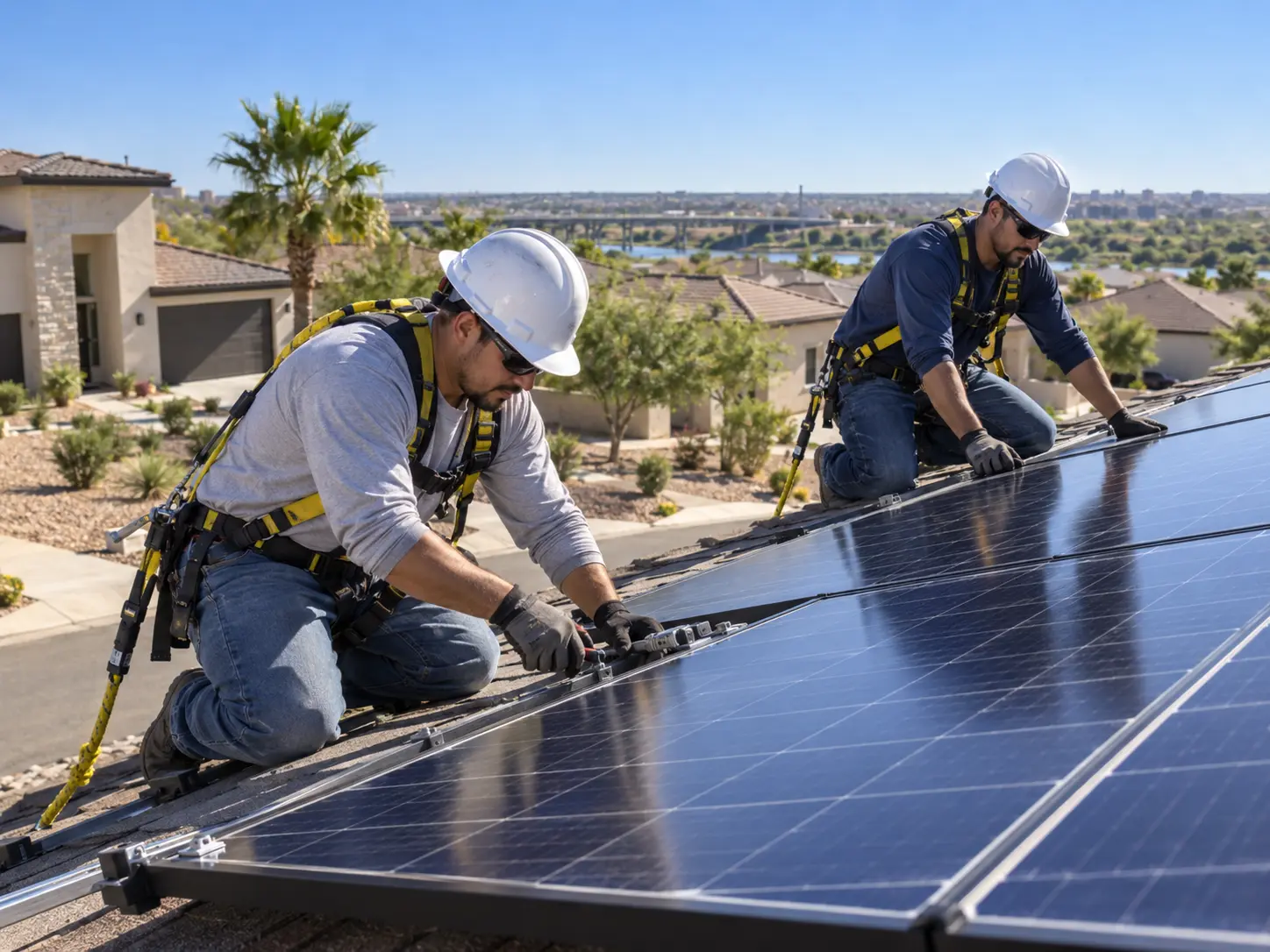
A solar panel installation is the construction phase of a project that has already been designed. By the time a crew is on the roof, the system size in kilowatts, the module layout, the inverter type and the interconnection method have all been decided, permitted and approved. The installation itself is largely about executing that plan safely and correctly: setting attachments into structural members, flashing every penetration, running conduit, landing conductors, and terminating everything to code.
For most Laredo homes, that means a rooftop array on one or more roof planes, DC conductors routed to an inverter, and an AC connection back into the electrical panel or a dedicated production meter arrangement. The array is grid-connected, so the utility must review and authorize the interconnection before the system is energized.
Why Property Owners Request Solar Installation
- To displace part of the electricity currently purchased from the utility with on-site generation.
- To replace a variable monthly utility expense with a known, fixed project cost.
- To pair a PV array with battery storage for backup power on selected circuits.
- To generate electricity on site from a renewable source with no fuel and no combustion.
- To add capacity ahead of a known load increase, such as electric vehicle charging or an added HVAC zone.
- To install while a roof is new, avoiding a removal and reinstallation later in the roof's life.
What Is Typically Involved
Scope varies by property, but a standard grid-connected residential installation usually covers the following work.
- Site and structural preparation. Confirming rafter or truss locations, verifying roof condition and marking the array footprint against the approved layout.
- Racking and attachments. Setting roof attachments into structural members, flashing each penetration, and mounting rails to hold the modules at the designed spacing.
- Module installation. Placing and clamping the solar modules, then bonding and grounding the array as required.
- DC wiring. Connecting strings or microinverter trunk cables, routing conductors through conduit, and installing rapid-shutdown equipment where required.
- Inverter and AC work. Mounting the inverter, installing any AC disconnect, and landing the circuit at the electrical panel — sometimes with a supply-side tap or a panel upgrade.
- Monitoring. Commissioning the monitoring gateway so production data is visible per system or per module, depending on the inverter architecture.
- Inspection and activation. Local inspection, then utility approval to operate before the system starts producing.
Comparing installation quotes for a Laredo property?
Send your roof type, monthly electricity use and what you want the system to accomplish, and start a property-specific quote request.
Equipment and Components
- Solar modules. Photovoltaic panels rated in watts. Higher-wattage modules mean fewer panels for the same system size, which matters on a roof with limited usable area.
- Inverter. A string inverter, microinverters or a hybrid inverter. This choice affects shading tolerance, per-module monitoring and whether battery storage can be added later.
- Racking and attachments. Rails, clamps and roof attachments matched to your roof covering — shingle, tile, metal or low-slope membrane.
- Rapid shutdown and disconnects. Safety equipment that de-energizes conductors at the array, plus AC and DC disconnecting means.
- Electrical panel and meter. The point of interconnection. Older or fully loaded panels sometimes require a busbar upgrade or a separate solar-ready subpanel.
- Optional battery storage. A battery, compatible inverter and backup load subpanel if outage protection is part of the goal.
Factors That Affect Installation Price
- System size in kilowatts and the number of modules installed.
- Module and inverter selection, including microinverters versus a single string inverter.
- Roof covering and mounting method — tile and low-slope work is generally more labor-intensive.
- Roof complexity: number of planes, pitch, height, dormers, obstructions and access constraints.
- Conduit run length between the array, the inverter location and the electrical panel.
- Electrical work such as a main panel upgrade, a subpanel, or a supply-side connection.
- Whether battery storage and a backup load panel are included in scope.
- Permitting fees, engineering letters and utility interconnection requirements.
- Financing structure, which changes total cost paid even when the hardware is identical.
Questions to Ask Before Choosing an Installer
- What system size in kW are you proposing, and what annual production do you estimate?
- Which panel model, quantity and inverter make and model are included?
- What attachment and flashing method will be used on my specific roof covering?
- Is permitting and utility interconnection filing included in the price?
- Will my electrical panel need an upgrade, and is that in the quote or an allowance?
- What workmanship coverage applies to roof penetrations, and for how long?
- Who performs the work — direct employees or subcontracted crews?
- What is the total price, and how does it change if I add battery storage later?
Solar Project Checklist
- Twelve months of electricity usage in kilowatt-hours, not just dollar totals.
- Roof age, covering type and any known leaks or repairs.
- Photos of the electrical panel interior label and the meter.
- Notes on shading — trees, neighboring structures, rooftop equipment.
- A decision on whether outage backup matters to you.
- Two or more written, itemized quotes for the same system size.
- Confirmation of who files permits and interconnection paperwork.
- A plan for roof replacement timing if the roof is more than halfway through its life.
How an Installation Project Runs
- Phase 1
Assessment
Roof measurement, structural review, shading analysis and electrical panel inspection.
- Phase 2
Design and proposal
Module layout, system size, inverter selection and an itemized written quote.
- Phase 3
Permits and interconnection
Permit application to the local jurisdiction and interconnection filing with the utility.
- Phase 4
Install and activate
Racking, modules, wiring, inverter, inspection and utility authorization to operate.
The exact sequence and timeline vary by provider, property and utility requirements. Ask for the expected schedule in writing, including which milestones depend on third-party review.
Ready to compare solar options for your property?
Share a few details about your roof and current electricity use to start a property-specific quote request.
Solar Installation FAQs
How long does solar panel installation take?
The rooftop work on a typical single-family home is often completed in one to three working days once materials are on site. The overall project is longer because it includes the site assessment, engineering and layout, permit approval, and utility interconnection review. The system cannot legally be energized until required inspections and utility authorization are complete, and those steps are outside any installer's direct control.
Do I need to be home during the installation?
Access matters more than attendance. Crews need roof access, access to the electrical panel and meter area, and often a shaded staging area for materials. Interior work — a main panel change, a subpanel addition, a monitoring gateway — does require someone to let the crew in. Ask your provider which days need interior access when the schedule is set.
Will installation damage my roof?
Mounting hardware penetrates the roof deck at each attachment point, and each penetration is flashed and sealed as part of a standard installation. On shingle roofs, flashing is usually integrated under the course above the attachment. On tile, tile hooks or replacement flashing tiles are used. Ask specifically what attachment and flashing method will be used on your roof covering, and what workmanship coverage applies to those penetrations.
What permits are involved?
A photovoltaic installation typically involves a building or electrical permit from the local authority having jurisdiction, plus a separate interconnection application with the electric utility. Requirements, review times and inspection scheduling vary by jurisdiction and utility. Confirm who files each application, who pays the fees, and whether permitting is included in the quoted price.
Can panels be installed on a metal or tile roof?
Yes. Standing-seam metal roofs often use clamps that attach to the seam without penetrating the panel, which many installers consider a favorable surface. Exposed-fastener metal and concrete or clay tile both have established mounting methods, though tile work is more labor-intensive and can involve breakage and replacement tiles. The mounting method should be named in your written quote.
What happens if my roof needs replacing soon?
Replace the roof first if it is near the end of its service life. Removing and reinstalling an existing array later is a real project with its own labor cost and a temporary loss of production. If a roof replacement is likely within a few years, get roofing pricing before you commit to a solar layout, and see our page on solar panel removal and reinstallation.
What is included in a typical installation quote?
Look for system size in kilowatts, the specific panel model and quantity, inverter make and model, racking and attachment method, any electrical panel work, monitoring hardware, permitting and interconnection filing, labor, and the total price with payment terms. A quote that lists only a monthly payment is not comparable to one that lists equipment and scope.
Related Solar Resources
- Residential Solar Laredo TXHow home solar projects are planned and sized.
- Solar Battery StorageBackup power and storing daytime production.
- Solar Inverter InstallationString, micro and hybrid inverter differences.
- Solar Panel Cost in Laredo TXEvery variable that moves a solar quote.
- Solar Savings CalculatorModel production, offset and savings.
- Is My Roof Good for Solar?Orientation, shading, pitch and roof condition.
Ready to move forward? Request a solar quote or call 956-395-1662.
Ready to Explore Solar for Your Property?
Start with a quick quote request and provide a few details about your property and current electricity use.