
Solar Panels Rio Bravo TX
A solar array in Rio Bravo keeps producing for years with modest attention — the key is knowing what production monitoring is telling you and acting on it early.
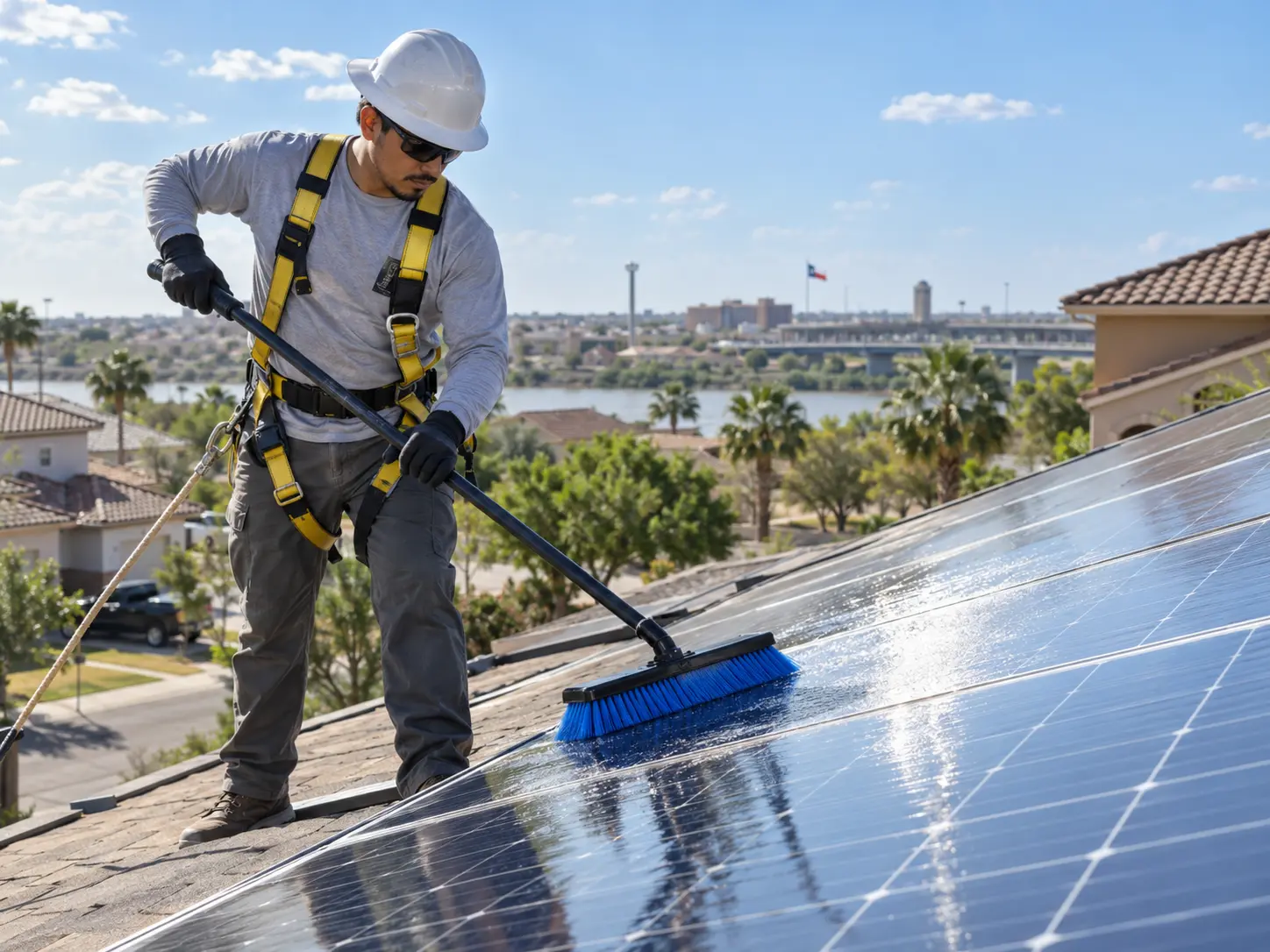
Once a system is installed and generating, the ongoing work shifts from construction to upkeep. Solar arrays have relatively few moving parts compared to most home mechanical systems, but panels sit outdoors year-round, exposed to dust, debris and gradual wear on connections and mounting hardware. Production monitoring is the primary tool for catching problems before they become expensive, since a drop in output is often the first visible sign that something needs attention.
What Production Monitoring Shows
Most inverters pair with an app or web dashboard that tracks daily, monthly and annual production, sometimes down to the individual panel depending on the inverter architecture. Comparing current production to the same period in prior years, while accounting for weather, is a practical way to spot a real decline rather than normal day-to-day variation. A sudden drop is usually more urgent to investigate than a slow, gradual one.
Common Reasons for a Production Drop
- Dust, dirt or debris accumulation reducing light reaching the cells.
- New shading from tree growth or a structure built or modified since installation.
- A failed microinverter, optimizer, or a string-level wiring fault.
- A tripped breaker or disconnect that went unnoticed.
- Gradual panel degradation, which is expected over many years but should be slow, not sudden.
Noticing a production drop on your Rio Bravo system?
Send your monitoring data or a description of the change and we'll help you figure out next steps.
Building a Simple Maintenance Routine
A practical routine includes checking the monitoring dashboard periodically, doing a visual inspection from the ground for obvious damage or debris, and scheduling a professional inspection if production trends downward without an obvious weather explanation. For panel cleaning specifics, see our page on solar panel cleaning, and for a full system checkup, see solar system inspection. If you're still deciding on a system for a Rio Bravo property, start with solar panel installation and residential solar planning.
Simple Habits That Catch Problems Early
- Check the monitoring app or dashboard on a regular schedule.
- Note weather conditions when reviewing unusually low production days.
- Do a ground-level visual check after major storms.
- Keep a record of past production to compare against seasonally.
- Schedule a professional inspection if a decline persists beyond weather.
Questions to Ask a Maintenance Provider
- What does a standard maintenance visit include?
- How will findings and any issues be reported to me?
- Can you access my monitoring data remotely to help diagnose issues?
- What is the response time for a suspected inverter or wiring fault?
- Do you offer scheduled cleaning based on my property's conditions?
Rio Bravo Solar Maintenance FAQs
Do solar panels in Rio Bravo need regular maintenance?
Solar systems have few moving parts, but they are not maintenance-free. Periodic visual inspection, occasional cleaning depending on dust and debris buildup, and checking production data against expectations are the main ongoing tasks. Electrical connections and mounting hardware should also be checked periodically as part of a longer-term maintenance plan.
How do I know if my system is underperforming?
Production monitoring is the tool for this. Most systems include a monitoring app or web dashboard showing daily and monthly production. A sustained drop compared to prior periods at the same time of year — accounting for weather — is worth investigating rather than ignoring, since it can point to shading changes, a failed component, or a wiring issue.
What causes production to drop over time?
Common causes include dust or debris accumulation on the modules, new shading from tree growth or a nearby structure, a failed microinverter or optimizer, or a string-level wiring issue. Some drop in output over many years is expected as panels degrade slowly, but a sudden or sharp drop usually indicates something specific rather than gradual aging.
How often should panels be cleaned?
There's no fixed schedule that fits every property — it depends on local dust, nearby agricultural or unpaved road activity, and rainfall patterns that naturally rinse panels. Monitoring data is a practical way to judge whether cleaning is needed: a gradual decline in otherwise-similar weather conditions is a reasonable trigger to have panels inspected and cleaned.
What should a maintenance visit include?
A visual check of panels, racking and wiring for damage or loose connections, a review of inverter status and error logs, comparison of recent production against historical data, and cleaning if warranted. Ask your provider what a standard maintenance visit covers and how findings are reported to you.
Who do I contact if my monitoring app shows an error?
Contact your installer or maintenance provider with the specific error code or the date range showing abnormal production. Having that information ready — rather than a general 'it seems off' report — helps a technician diagnose the issue faster, whether it's an inverter fault, a communication dropout, or an actual production problem.
Related Solar Resources
- Solar Panel CleaningWhen and why panels need cleaning.
- Solar System InspectionA full checkup for an existing system.
- Solar Panel Installation Laredo TXHow new systems are built.
- Residential Solar Laredo TXPlanning a home solar project.
- Solar Battery StorageBackup power options.
- Solar Service AreasSee all areas we serve.
Need a maintenance check for a Rio Bravo system? Request service or call 956-395-1662.
Ready to Explore Solar for Your Property?
Start with a quick quote request and provide a few details about your property and current electricity use.